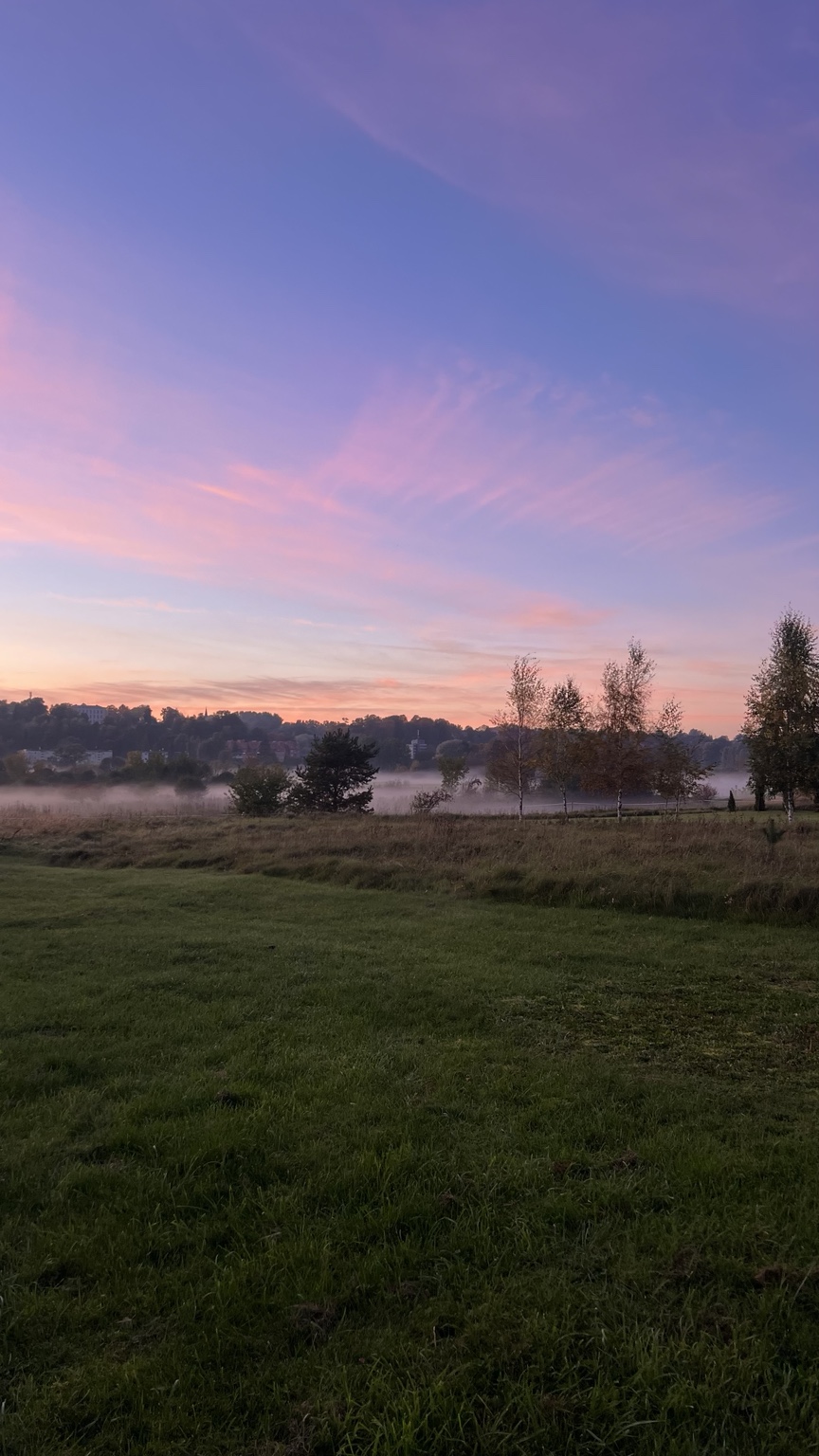
My friend came to visit, which—as usual—meant we needed to go somewhere.
Yes, this is Solo Camping Latvia going on a distinctly non-solo trip. I still have friends. Shut up.
The original plan was beautifully straightforward: visit the Riežupe Sand Caves near Kuldīga, climb the observation tower, enjoy an autumn walk through town, visit a bookshop and buy olives.
The olives were important.
KUULE in Kuldīga sells the best olives I have ever eaten. I am not generally a devoted olive person, but these are different. If I visit Kuldīga and return without them, the trip has been completed incorrectly.
It was a modest itinerary. Entirely manageable.
The day disagreed.
A beautiful beginning
The drive towards Riežupe was lovely. Autumn had begun working its way through the landscape, turning maple leaves gold and scattering flashes of yellow and red among the green.
The first warning came when we reached the caves.
The website said they opened at 11.00. The sign at the entrance said 12.00.
We arrived at roughly 11.45, so this did not seem disastrous. We followed the path through the little forest towards the ticket area—and met the mosquitoes.
Apparently nobody had informed them that it was October.
My camping equipment had finally been removed from the car, which meant my mosquito repellent was packed away at home, enjoying its off-season retirement while we were treated as an unexpected late-autumn buffet.
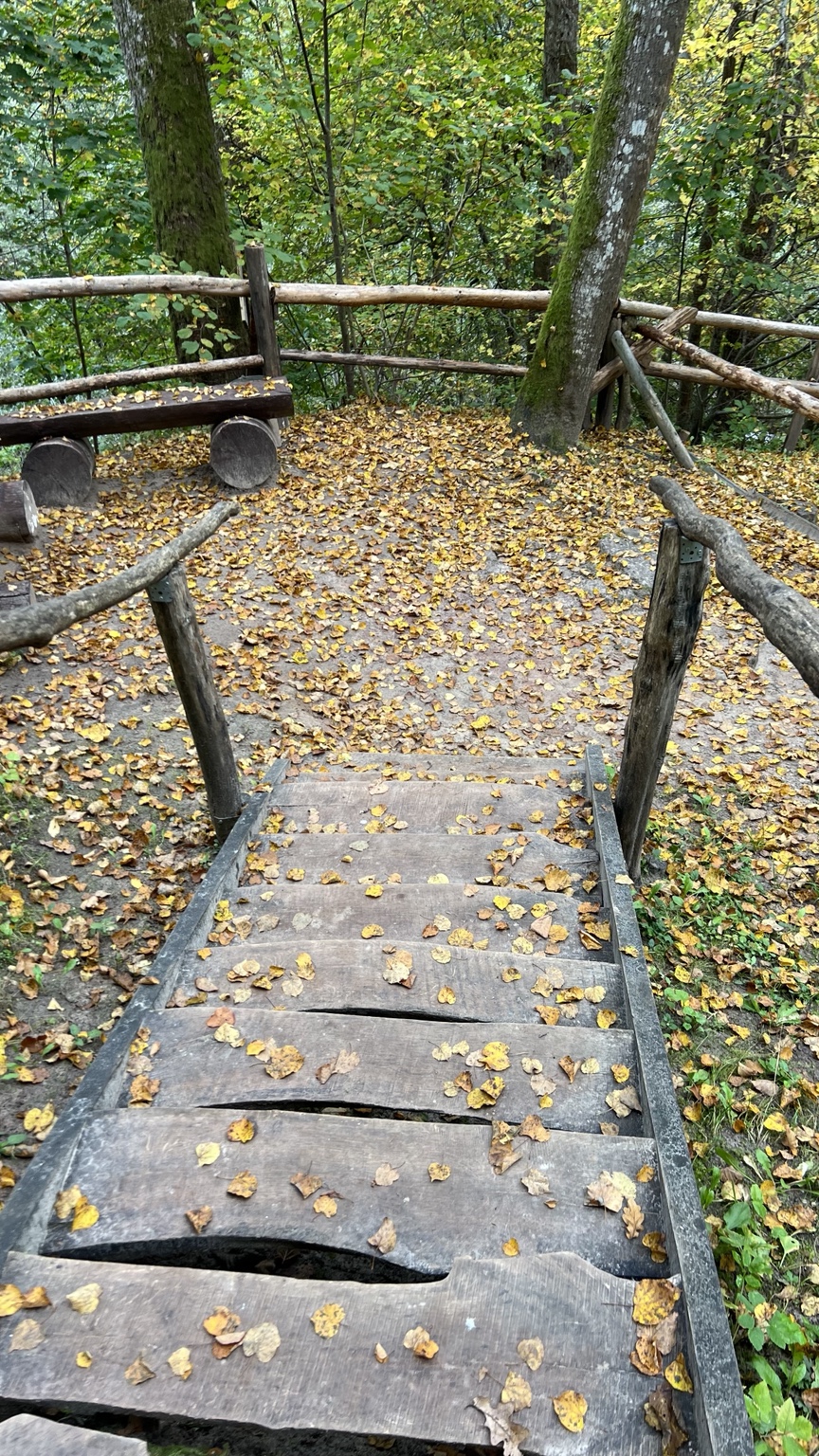
Everything at the caves was closed. Other visitors were waiting, so we assumed somebody would appear at noon. More people arrived, and every new group seemed to bring another enthusiastic wave of mosquitoes.
At 12.03, I found the phone number and called.
“Are you open today?”
“Yes, we open at twelve.”
“I’m here. There is nobody here.”
They told me they were just leaving and would arrive shortly. They eventually appeared at approximately 12.20.
By then, one group had given up and left, the remaining crowd was irritated, and the mosquitoes had enjoyed an extremely successful opening ceremony.
If your advertised opening time is noon, noon should not be the moment you begin travelling to your workplace.
The caves rescue themselves
Thankfully, the caves themselves were lovely.
Tickets cost €8 per adult and payment is cash only. The caves remain at approximately +8°C throughout the year, so even during summer it is sensible to bring something warm. On an autumn day like ours, ordinary outdoor clothing was perfectly comfortable.
The air inside felt surprisingly dry. The passages are narrow and dark in places, and taller visitors may spend rather more time ducking than I did. Being short finally delivers a practical advantage.
Visitors are asked not to touch the cave walls because the sandstone structures are delicate and easily damaged. This is also not somewhere I would enthusiastically take somebody who is intensely claustrophobic or frightened of darkness.
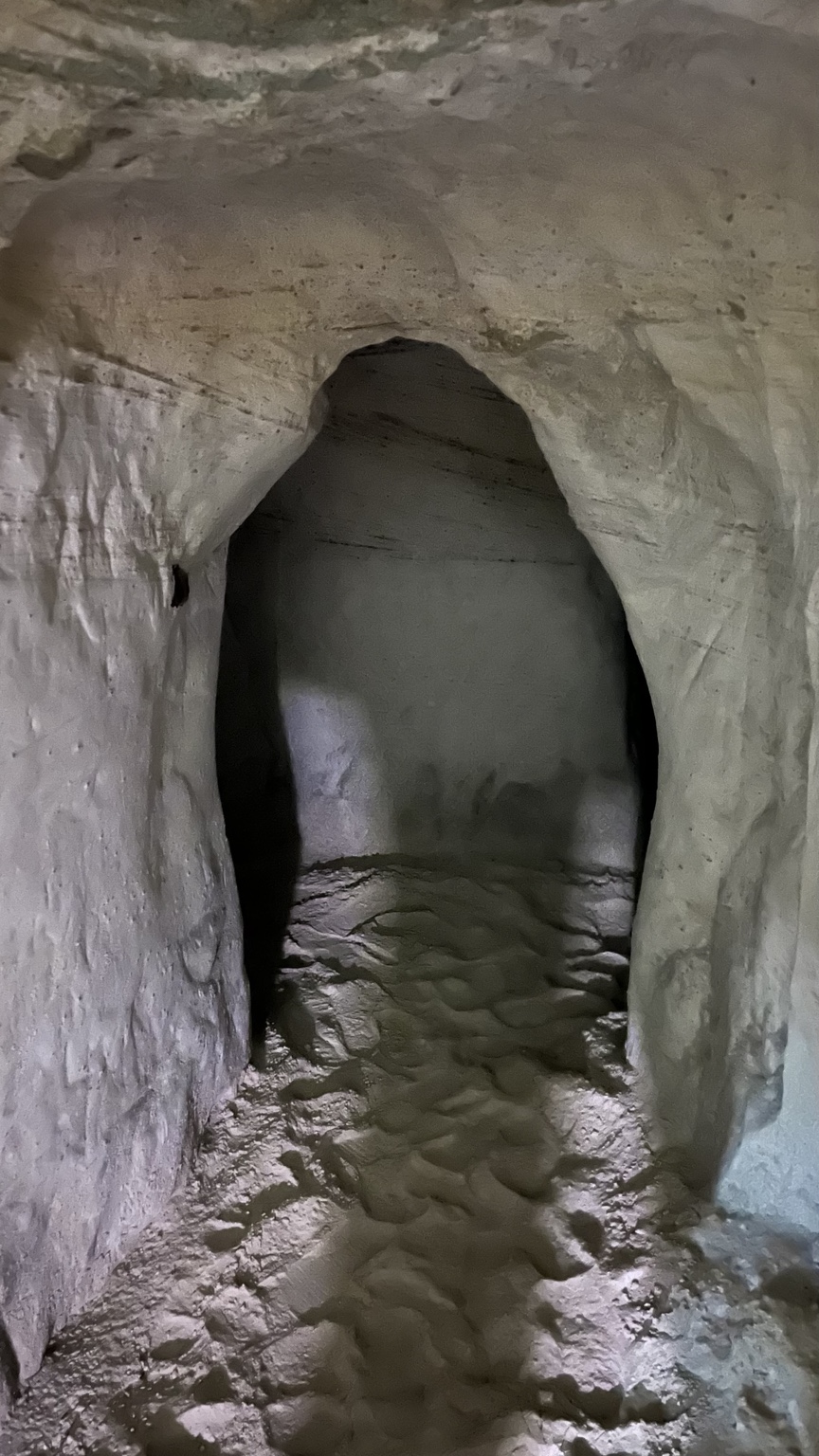
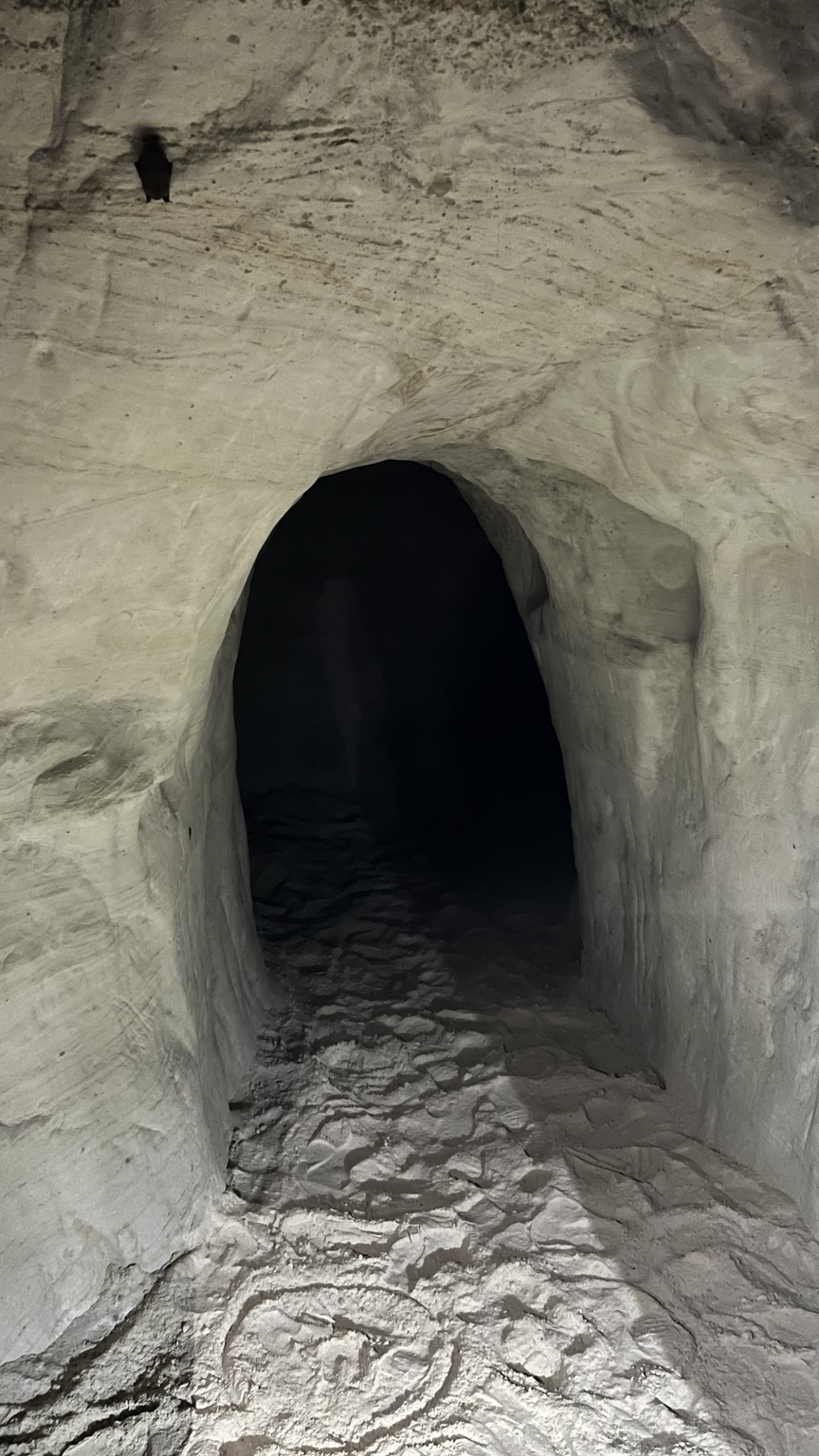
For the rest of us, wandering through the softly lit passages was fascinating. Our guide explained the caves, the sand, their water source and the bats that use them. The tour lasted around twenty minutes, but it was still worth doing.
The poor guide had inherited a crowd that had already spent far too long waiting in a mosquito-infested forest, but once we were underground, the frustration began to fade.
The organisation was poor.
The caves were great.
Both things can be true.
Kuldīga has other plans
After Riežupe, we headed towards Kuldīga with the intention of visiting the observation tower. I have climbed it several times before and thought it would be a perfect way to see the autumn colours.
As we approached town, we began noticing cars parked along both sides of the road. Then more cars. Then full car parks.
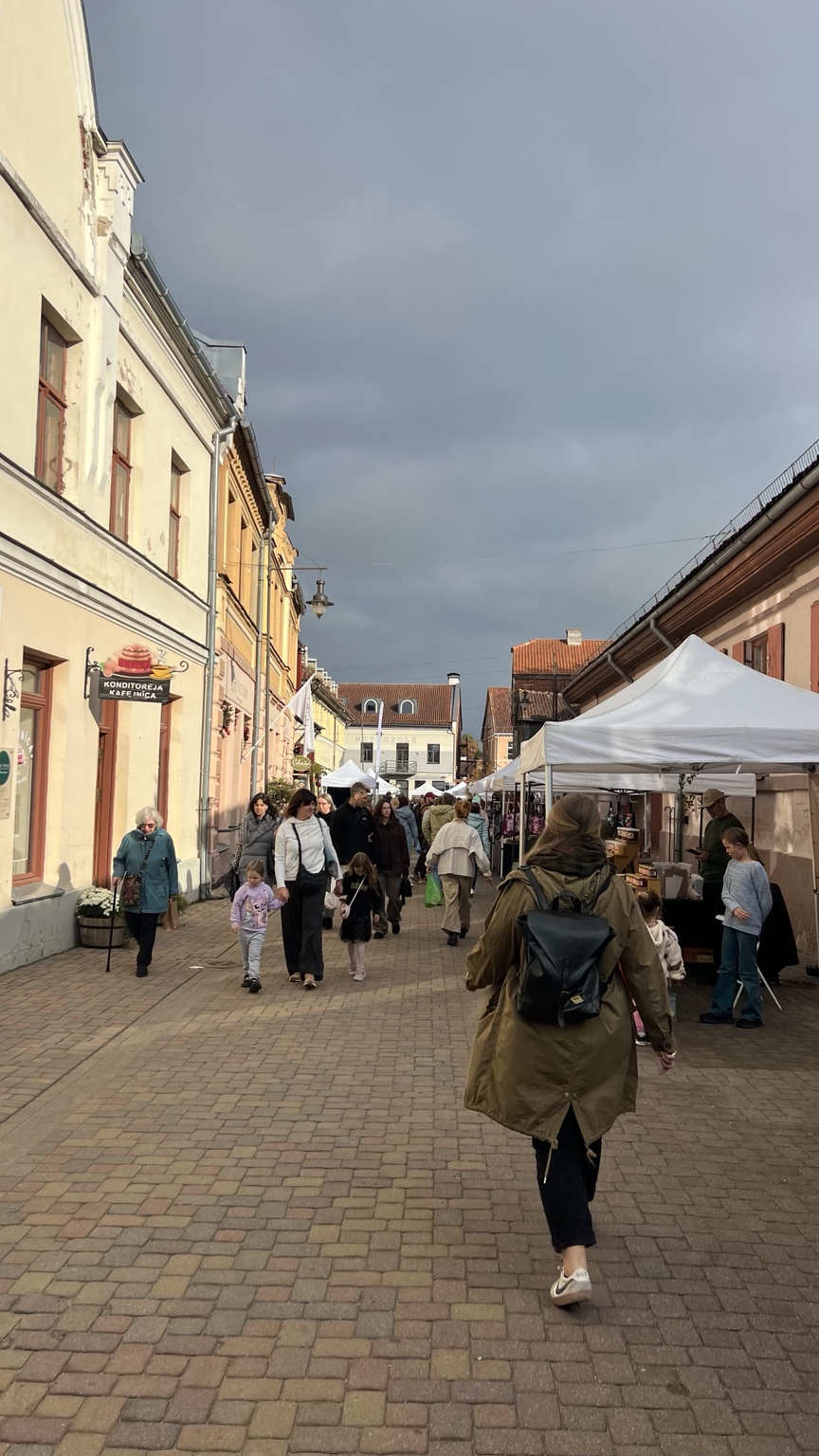
Kuldīga is often busy at weekends, but this was something else entirely. While crossing the bridge, we saw stalls everywhere and people packed into the streets.
A National Guard member was helping regulate traffic, so I lowered the window and asked what was happening. Somehow, the advertising had completely missed me.
We had accidentally arrived during the Hercoga Jēkaba gadatirgus—one of Kuldīga’s major autumn markets.
Good for the market.
Less good for two women who had planned a quiet autumn walk and do not particularly enjoy being compressed among other human bodies.
We looked at the crowds, looked at each other and made the executive decision to leave. The tower could wait. The olives would be recovered later.
Tactical withdrawal to Jūrkalne
We redirected ourselves towards Jūrkalne, stopping at Virši for lunch along the way.
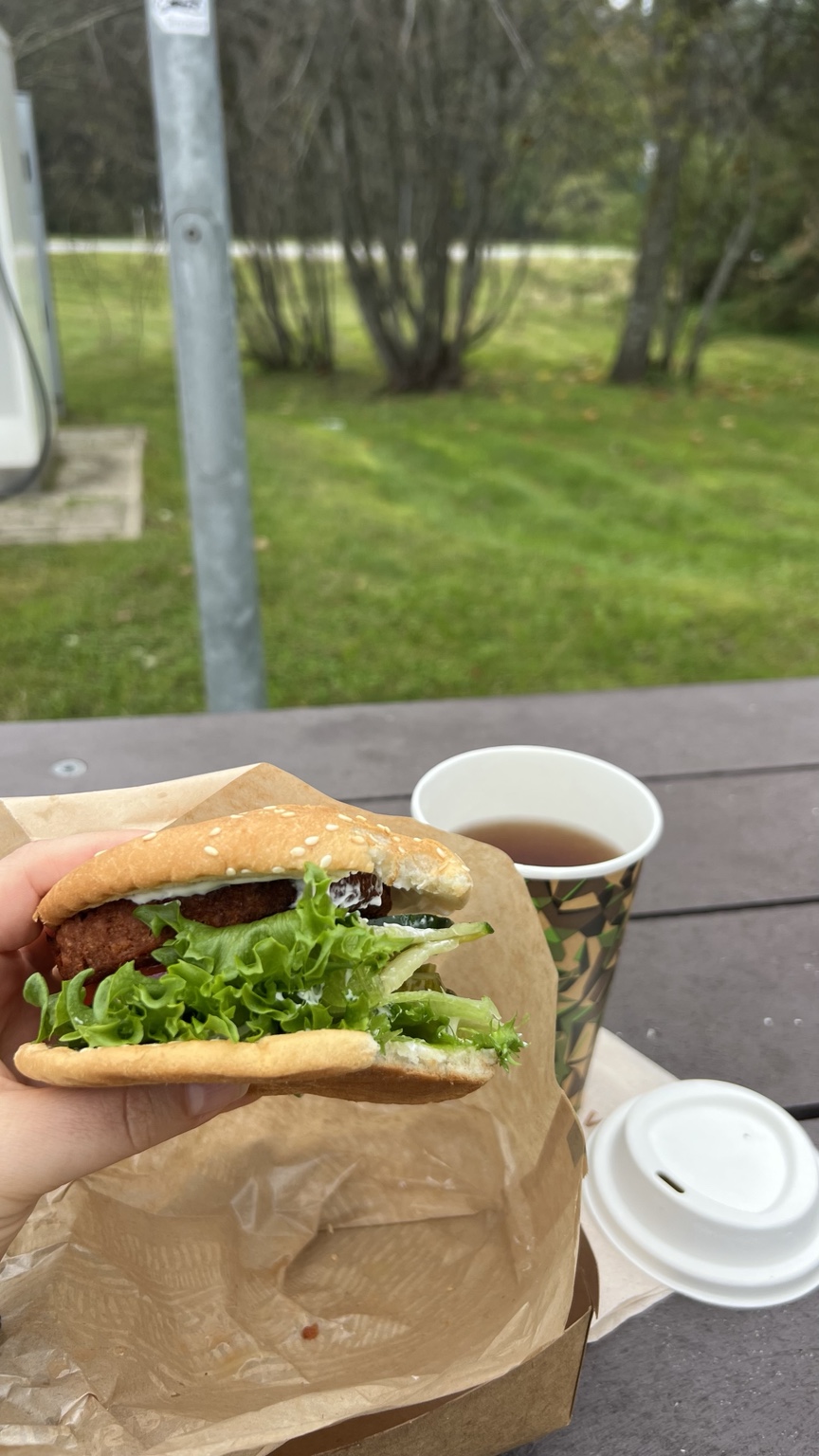
My friend is vegan, and the Virši pea burger is genuinely one of the best vegan burgers I have tried. The price-to-quality ratio is excellent, it tastes properly satisfying rather than apologetically plant-based, and it rescued morale beautifully.
Fed and considerably less annoyed, we continued to Jūrkalne for a walk along the coast.
Naturally, the day was not finished placing obstacles in our path.
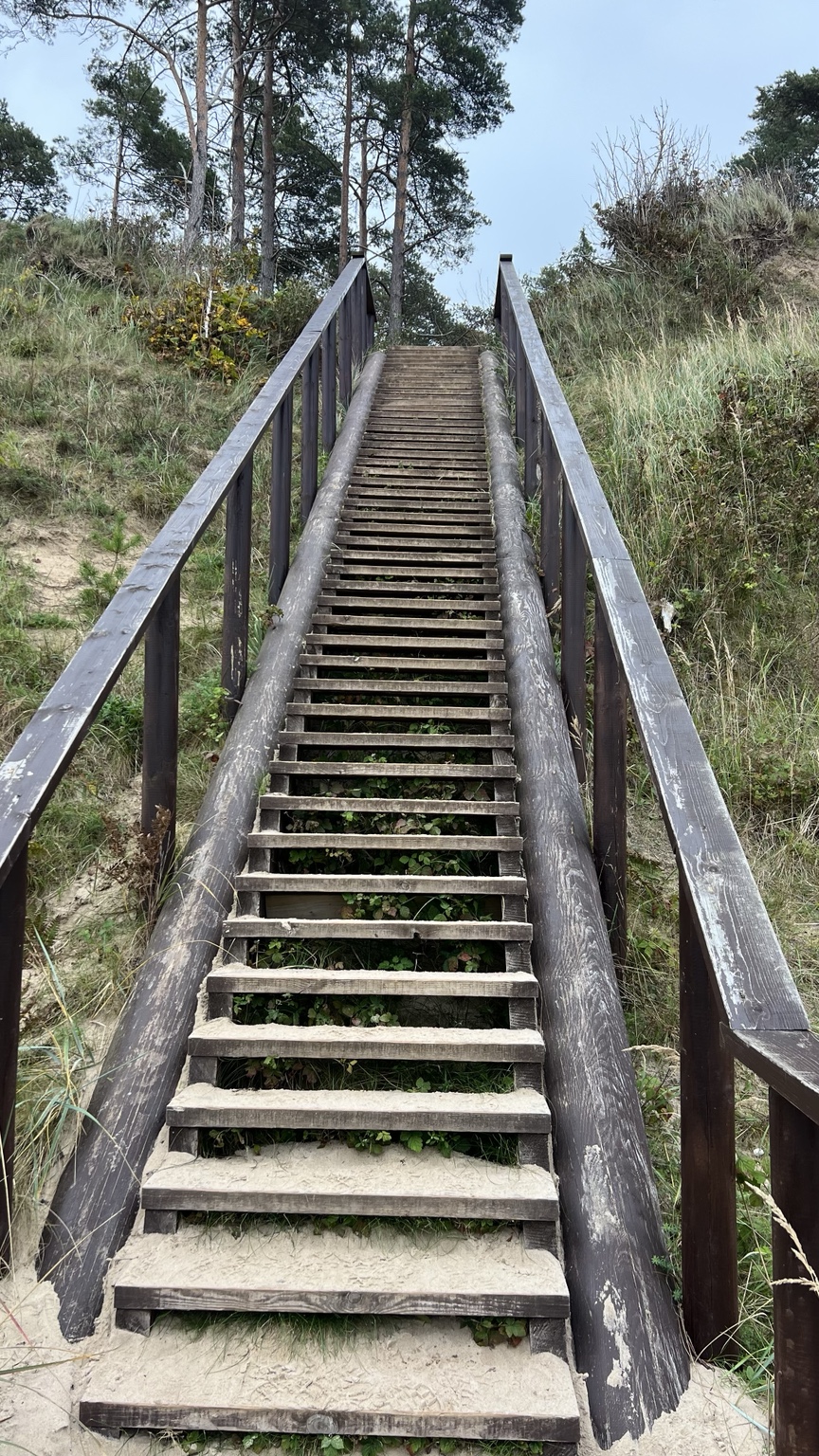
The staircase we normally use to reach the beach had been demolished.
At this point, we could only laugh. Of course the stairs were gone. Why would this particular route contain functioning stairs when every other part of the day had required renegotiation?
We followed a smaller path towards another staircase instead. Enormous exposed tree roots crossed the route, turning our peaceful seaside walk into a small climbing exercise.
“What is happening today?” became the unofficial motto of the trip.
Still, we reached the beach.
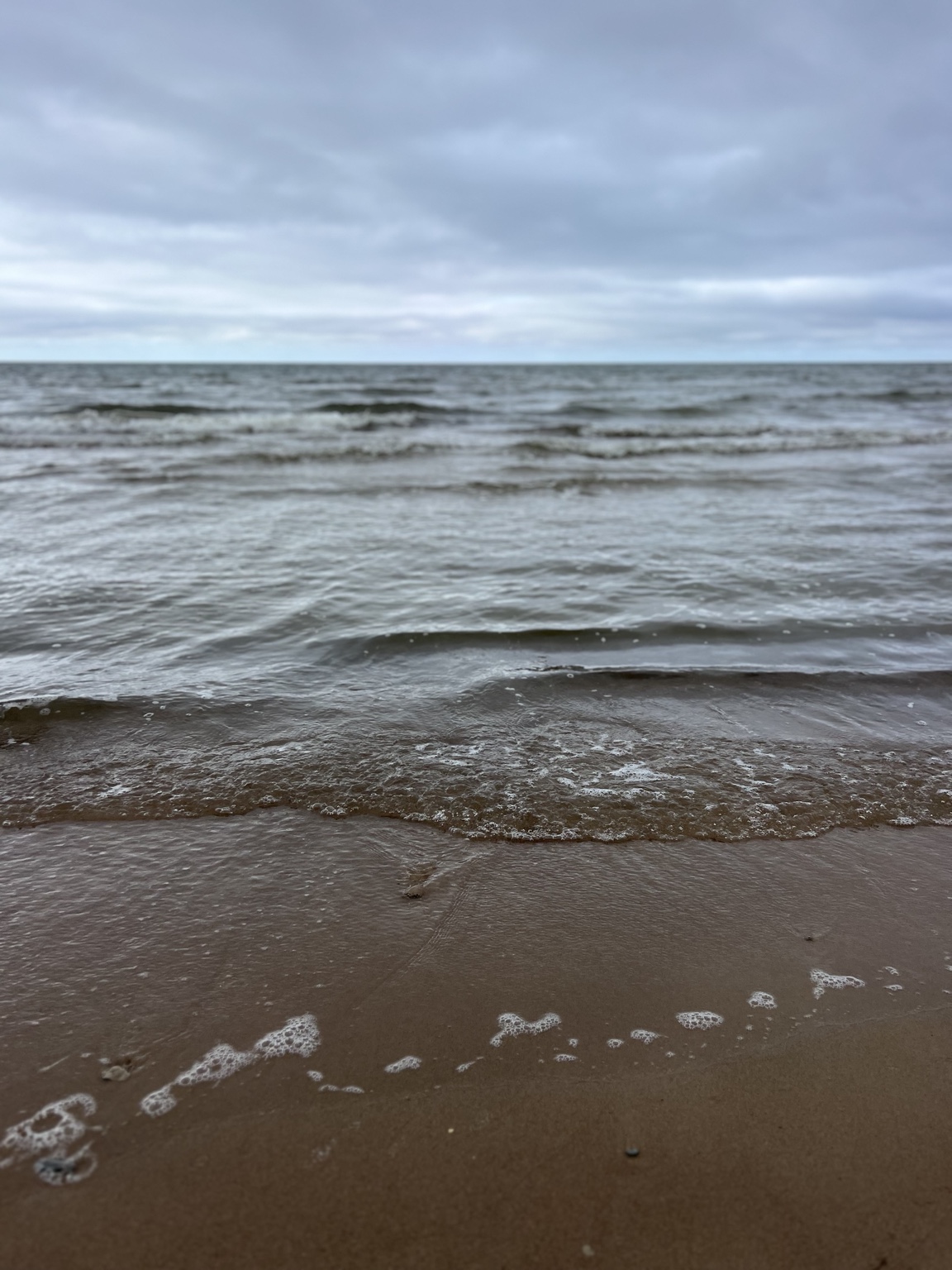
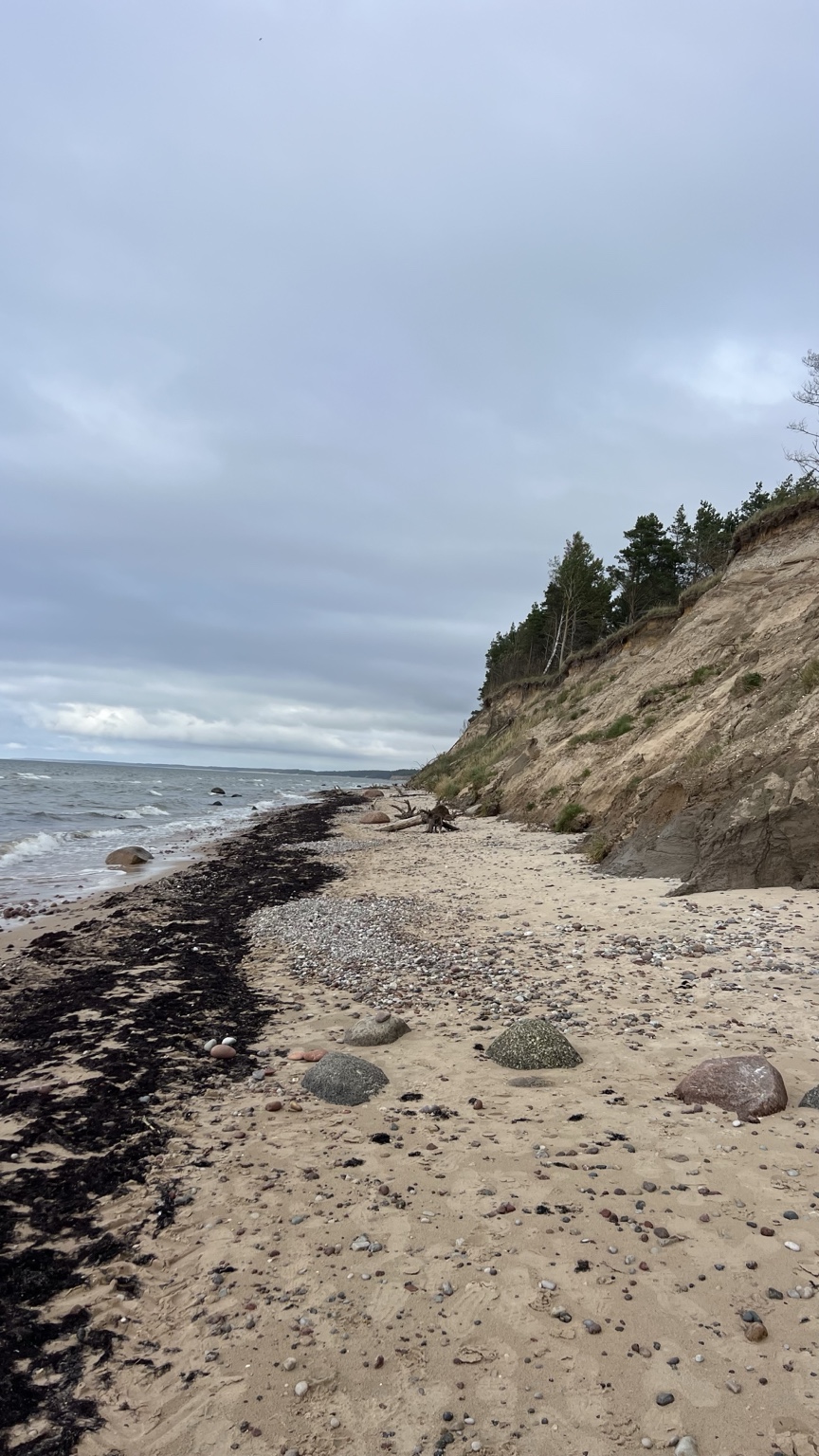
The sea was grey and restless beneath an overcast sky, and the steep Jūrkalne cliffs stretched along the sand. Sometimes a place does not need to do anything spectacular. It simply needs enough space for your brain to become quiet again.
The sacred olive mission
On the way home, we returned to Kuldīga. The market was still running, but the worst of the crowd had dispersed. We left the car in a supermarket car park on the other side of town and walked for around ten minutes into the centre.
We wandered among the remaining stalls. I bought soap and something described as a shower marshmallow cloud, which is precisely the sort of unnecessary object one acquires when a day has already abandoned its original structure.
I visited the bookshop, although the book I wanted was not available.
More importantly, I made it to KUULE.
KUULE is a zero-waste shop where olives can be bought by weight, and their olives are superior camping food. That is not a suggestion. It is established fact.
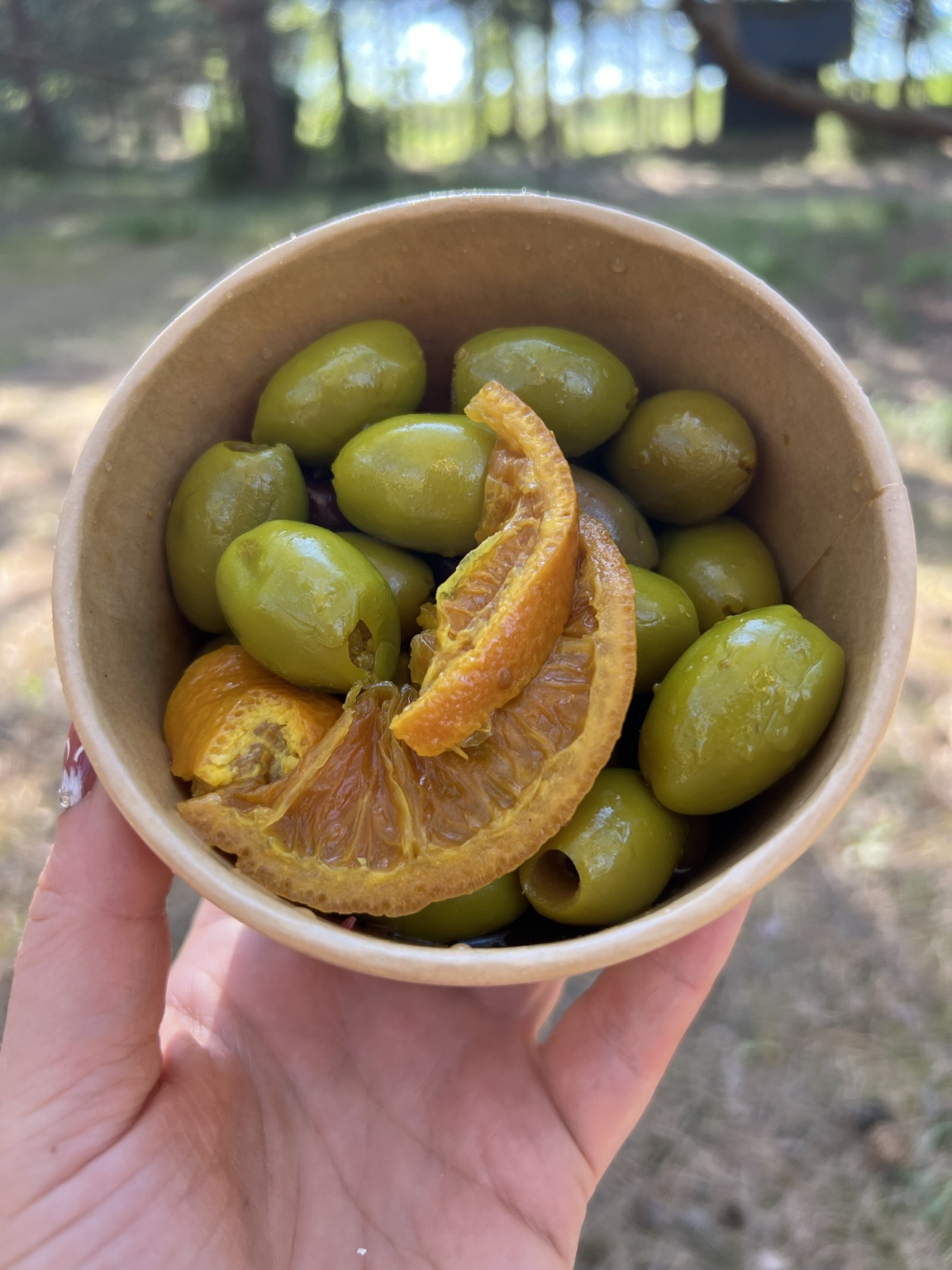
I bought my favourites and began eating them before we had even properly left town. The essential objective of the trip had finally been completed.
A bakery with almost nothing left
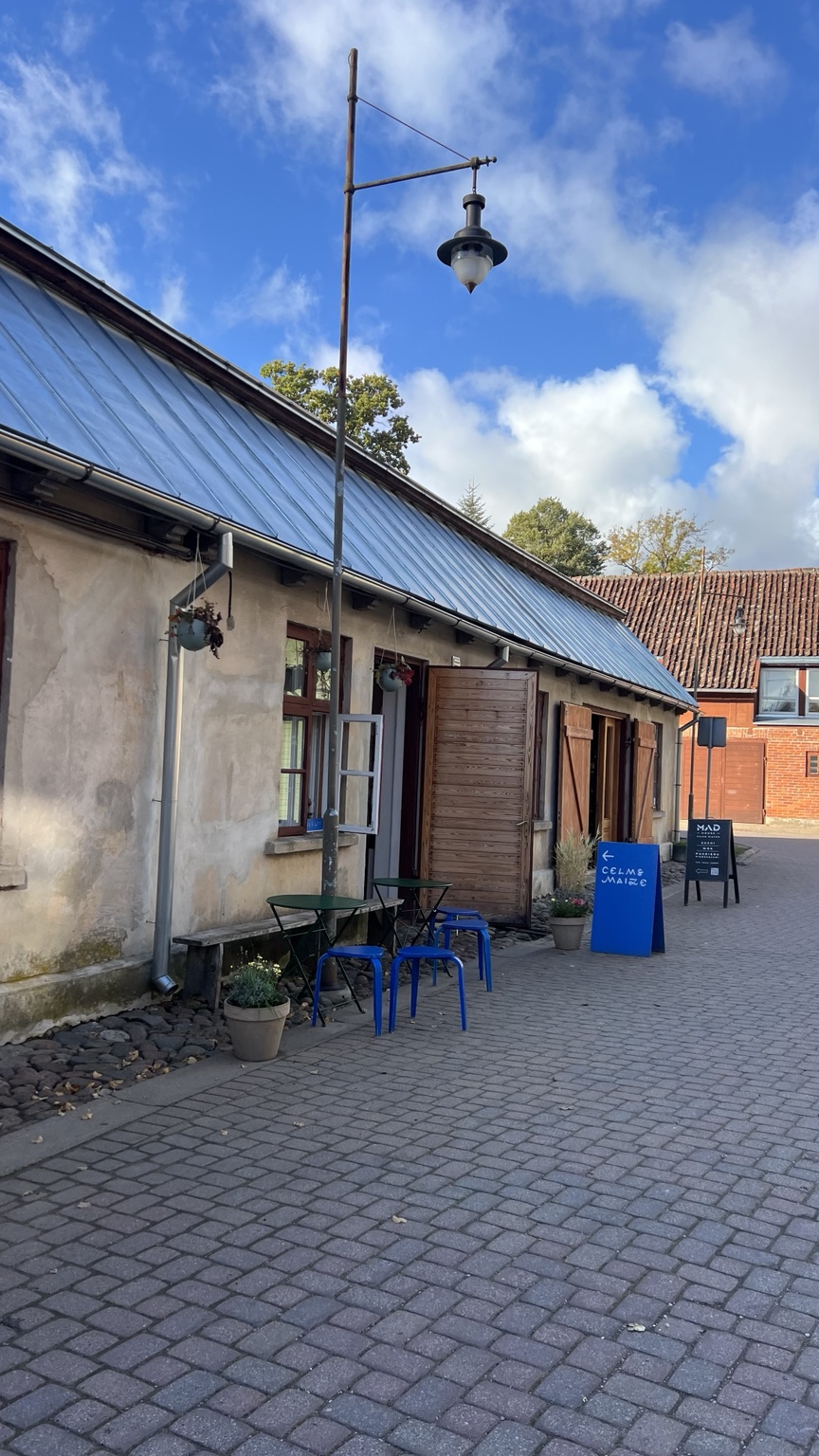
Before leaving Kuldīga, I also stopped at Celms, one of my favourite sourdough bakeries.
I usually buy focaccia there because I do not make it myself. Celms focaccia paired with KUULE olives is an excellent camping combination.
By then it was around four in the afternoon, however, and the bakery had endured an extremely busy market day. Most of the shelves had been thoroughly cleared.
No focaccia for me.
I managed to bring home a couple of Berliners for the people who had remained at home, along with some crunchy cheddar breadstick-like things whose precise English classification remains uncertain.
The revised itinerary
A day can fail without being a failure
Almost nothing followed the original plan.
The caves opened late. The mosquitoes were thriving. The tower was abandoned because of crowds. Kuldīga had been taken over by a market we knew nothing about. The desired book was unavailable. Celms had almost run out of bread, and even the usual staircase at Jūrkalne had disappeared.
And yet, somehow, it was a good day.
We saw the sand caves. We ate an excellent burger. We walked beside the Baltic Sea. We eventually explored a quieter Kuldīga. I acquired soap, pastries and the required olives. The drive home was sunny and beautiful.
Travel does not always need to unfold neatly to be worthwhile.
Sometimes the day simply keeps saying, “No, not that way,” until you stop arguing, choose another road and discover that the revised version was rather lovely too.
Although next time, I am checking the Kuldīga events calendar—and returning the mosquito repellent to the car.